Thursday, October 19, 2017

19 october 2017. Julian Assange: Campaigner or attention-seeker?


19 october 2017.
Julian Assange: Campaigner or attention-seeker?

Image copyright Getty Images
Image caption Julian Assange has sought asylum at the Ecuadorean embassy in London since 2012
To his supporters, Julian Assange is a valiant campaigner for truth. To his critics, he is a publicity-seeker who has endangered lives by putting a mass of sensitive information into the public domain.
Mr Assange is described by those who have worked with him as intense, driven and highly intelligent - with an exceptional ability to crack computer codes.
He set up Wikileaks, which publishes confidential documents and images, in 2006 - making headlines around the world in April 2010 when it released footage showing US soldiers shooting dead 18 civilians from a helicopter in Iraq.
But, later that year, he was detained in the UK after Sweden issued an international arrest warrant over allegations of sexual assault.
Swedish authorities wanted to question him over claims that he raped one woman and sexually molested and coerced another in August 2010, while on a visit to Stockholm to give a lecture. He says both encounters were entirely consensual.

Political asylum

In May 2012, after more than a year of legal argument, which saw lawyers for Mr Assange appeal against his extradition to Sweden, the UK Supreme Court ruled in favour of extradition.
A month later, the Wikileaks founder entered the Ecuadorian embassy in London, requesting - and receiving - political asylum. He has been there ever since.
The Wikileaks founder said he feared being extradited from Sweden to the US and put on trial for releasing secret US documents; the Swedish foreign ministry insisted the sole reason they wanted Mr Assange extradited was so the allegations against him could be properly investigated.
Five years later, Swedish prosecutors say they are dropping their investigation into Mr Assange.
However, the Metropolitan Police says he will still be arrested if he leaves the embassy building.
Image copyright Getty Images
Image caption Mr Assange used a speech in London to urge the US to end its "witchhunt" against Wikileaks
Mr Assange has been generally reluctant to talk about his background, but media interest since the emergence of Wikileaks has thrown up some insight into his influences.
He was born in Townsville, in the Australian state of Queensland, in 1971 and led a rootless childhood while his parents ran a touring theatre.
He became a father at 18, and custody battles soon followed.
The development of the internet gave him a chance to use his early promise at maths, though this, too, led to difficulties.

Hacking

In 1995 Mr Assange was accused, with a friend, of dozens of hacking activities.
Though the group of hackers was skilled enough to track detectives tracking them, Mr Assange was eventually caught and pleaded guilty.
He was fined several thousand Australian dollars - only escaping a prison term on the condition that he did not reoffend.
Image copyright Reuters
Image caption After pleading guilty to "hacking", Mr Assange escaped prison on the condition he did not reoffend
He then spent three years working with an academic, Suelette Dreyfus - who was researching the emerging, subversive side of the internet - writing a book with her, Underground, that became a bestseller in the computing fraternity.
Ms Dreyfus described Mr Assange as a "very skilled researcher" who was "quite interested in the concept of ethics, concepts of justice, what governments should and shouldn't do".
This was followed by a course in physics and maths at Melbourne University, where he became a prominent member of a mathematics society, inventing an elaborate puzzle that contemporaries said he excelled at.
He began Wikileaks in 2006 with a group of like-minded people from across the web, creating a web-based "dead-letterbox" for would-be leakers.
"[To] keep our sources safe, we have had to spread assets, encrypt everything, and move telecommunications and people around the world to activate protective laws in different national jurisdictions," Mr Assange told the BBC in 2011.
"We've become good at it, and never lost a case, or a source, but we can't expect everyone to go through the extraordinary efforts that we do."
Image caption Mr Assange told the BBC that in order to protect sources he would "encrypt everything"
He adopted a nomadic lifestyle, running Wikileaks from temporary, shifting locations.
He could go for long stretches without eating, and focus on work with very little sleep, according to Raffi Khatchadourian, a reporter for the New Yorker magazine who spent several weeks travelling with him.
"He creates this atmosphere around him where the people who are close to him want to care for him, to help keep him going. I would say that probably has something to do with his charisma."

Smear campaign

Wikileaks and Mr Assange came to prominence with the release of the footage of the US helicopter shooting civilians in Iraq.
He promoted and defended the video, as well as the massive release of classified US military documents on the Afghan and Iraq wars in July and October 2010.
The Wikileaks website went on to release new tranches of documents, including five million confidential emails from US-based intelligence company Stratfor.
But it also found itself fighting for survival in 2010, when a number of US financial institutions began to block donations.
Coverage of Mr Assange has been dominated by Sweden's efforts to question him over the 2010 sexual allegations.
He has said that such efforts were politically motivated and part of a smear campaign against him and his whistle-blowing website.
Mr Assange turned to Ecuador's President Rafael Correa for help, the two men having expressed similar views on freedom in the past. During an interview for Mr Assange's TV show on Russia Today, Mr Correa repeatedly praised Wikileaks and its work.
Mr Assange's stay at the Ecuadorean embassy has been punctuated by occasional press statements and interviews.
Image copyright Getty Images
Image caption Mr Assange dismissed reports in 2014 that he would be leaving the embassy to seek medical treatment
He made a submission to the UK's Leveson Inquiry into press standards, saying he had faced "widespread inaccurate and negative media coverage".
Concerns over his health also surfaced. As early as October 2012, Ecuador's embassy said it had sought assurances that Mr Assange would not be arrested if he was taken to hospital, saying it was "very concerned" over his condition, indicating that he had a lung infection.
But in August 2014, Mr Assange dismissed newspaper reports that he would be leaving the embassy to seek medical treatment.

'Significant victory'

Mr Assange later complained to the UN that he was being unlawfully detained as he could not leave the embassy without being arrested.
In February 2016, the UN panel ruled in his favour, stating that he had been "arbitrarily detained" and should be allowed to walk free and compensated for his "deprivation of liberty".
Mr Assange hailed it a "significant victory" and called the decision "binding", leading his lawyers to call for the Swedish extradition request to be dropped immediately.
The ruling was not legally binding on the UK, however, and the UK Foreign Office responded by saying it "changes nothing".
Late last year, Sweden's chief prosecutor Ingrid Isgren travelled to the Ecuadorean embassy in London to question Mr Assange over the 2010 rape allegation. Prosecutors had already dropped their investigation into the sexual assault allegations after running out of time to question and bring charges against him.
Image copyright AP
Image caption Mr Assange has complained to the UN that he is being unlawfully detained
Following Sweden's recent decision to drop the investigation into Mr Assange, the European Arrest Warrant for Mr Assange no longer stands.
But the Metropolitan Police said Mr Assange still faced the lesser charge of failing to surrender to a court in June 2012, an offence punishable by up to a year in prison or a fine.
A statement from the force said it was "obliged to execute that warrant should he leave the Embassy" - meaning he is still at risk of arrest.
A spokesman for the Home Office said it could neither confirm or deny any requests for extradition unless someone had been arrested.
At this point, it is still not known whether Mr Assange will face extradition to the US on leaving the Embassy.

More on this story

Related Internet links

The BBC is not responsible for the content of external Internet sites

China's leader and the speech that spells power

Is refugee crisis 'textbook ethnic cleansing'?

The religious debate over Delhi's firework ban

Japan's snap election explained

Video

Tight-lipped delegates avoid BBC reporter

'Death Island': Britain's 'concentration camp' in Russia

Video

Still photographs spring to life

Video

Girl in suit banned from church ceremony

Monday, October 16, 2017

စစ္တပ္နွင့္အတူ(၂)/ ေ၀စည္ (25.9.2017).

စစ္တပ္နွင့္အတူ(၂)

ရခိုင္အေရးသတင္းအမွားေတြ ကမာၻအနွံ႔ ပ်ံ႕ေနျပီလို႔ နုိင္ငံေတာ္အတုိင္ပင္ခံကေျပာတယ္။ တခ်ိန္ တည္းေလာက္မွာဘဂၤါလီအစြန္းေရာက္အၾကမ္းဖက္လို႔ တရား၀င္သံုးနႈံးေနရာက ဘဂၤါလီဆိုတာကိုသတင္းထုတ္ျပန္ေရးအဖြဲ႕က ျဖဳတ္ပစ္လိုက္တယ္။ (ဒါေပမဲ့ Eleven Media ကေတာ့ ဒီေန႔ထိသံုးေနတုန္းပဲ) အေနာက္လစ္ဘရယ္အုပ္စုနဲ႔ ေ၀းသထက္ေ၀းမွာစိုးတဲ့အတြက္ ေမေမကအင္မတန္လွတဲ့အကြက္ေတြနဲ႔ အဆုတ္အတက္ လုပ္ၾကည့္ေနပံုပါပဲ။ 
အဲဒီကာလေတြမွာပဲ AA ကိုစစ္တပ္ကတိုက္တယ္။ စစ္တပ္ပိုင္ျမ၀တီအြန္လိုင္းစာမ်က္နွာကေန ဘဂၤါလီေတြကိုေဖါက္ခြဲေရးသင္တန္းေပးေနတာ KIA ဆိုတဲ့အေၾကာင္းေဆာင္းပါး(ေခါင္းစဥ္ေတာ့ေမ့ေနျပီ) တက္လာတယ္။ မိနစ္ပိုင္းအတြင္းပဲ ျပန္ျဖဳတ္ခ်သြားတယ္။ ARSA နဲ႔ တျပည္လံုးကလက္နက္ကိုင္ေတာ္လွန္ေရးအင္အားစုေတြကိုဇာတ္ညႊန္းခြဲခ်ိတ္ဆက္ေပးခ်င္တဲ့သေဘာေတြ႔ရတယ္။ Timmingလြဲသြားလို႔ ျပန္ျပဳတ္သြားတာျဖစ္မယ္။ 
အဲ့သလိုပဲTimmingလြဲသြားျပီး ျပန္ျဖဳတ္ခ်လို႔မရတဲ့ လုပ္ရပ္တစ္ခုကိုလည္းစစ္တပ္က က်ဴးလြန္လိုက္ ေသးတယ္။ ဘာလဲဆိုေတာ့ ျမိဳ႕ေတာ္ခန္းမေရွ႕တရားပြဲကို ၀ီရသူထြက္ရပ္လိုက္တာပဲ။ ၀ီရသူက ျပဴးျပဴးျပဲျပဲ၊ လက္ရံုးေတြဆန္႔တန္းျပီးအစိုးရနဲ႔လႊတ္ေတာ္ကိုဆဲေရးတယ္။ စစ္တပ္ကိုဦးခုိက္တယ္။ စစ္တပ္ရဲ႕ အဲဒီတြက္ဆမႈအမွားေၾကာင့္ အတိုင္ပင္ခံနည္းနည္းသက္သာရာရသြားတာျဖစ္တယ္။ ၀ီရသူနဲ႔မဘသကို ျပည္သူေတြကေအာ့နွလံုးနာေနၾကတာမို႔လား။ 
တခ်ိဳ႕ေျပာၾကတာရွိတယ္။ အတိုင္ပင္ခံဟာညွပ္တိုက္တာခံေနရတယ္တဲ့။ မဟုတ္ပါဘူး။ အတိုင္ပင္ခံကိုစစ္တပ္ကလြဲလို႔ ဘယ္သူမွ မတိုက္ပါဘူး။ စစ္တပ္ကလြဲလို႔ က်န္သူေတြဟာတရားကိုဆုပ္ကိုင္ျပီးမတရားကိုတုိက္ေနၾကတာျဖစ္ပါတယ္။ ဓမၼကိုဆုပ္ကိုင္ျပီးအဓမၼကိုထိုးနွက္ေနၾကတာသာ ျဖစ္ပါတယ္။ ဓမၼဘက္ကရပ္ရင္ေတာ့ မည္သူမဆိုတိုက္ေဖာ္တိုက္ဖက္ေပါ့။ အဓမၼဘက္ကရပ္ရင္ေတာ့ အတိုင္ပင္ခံမကလို႔ ဘယ္သူပဲျဖစ္ျဖစ္ထိုးနွက္ခံရမွာေပါ့။ ေနာက္ျပီး ၂၀၀၈ ေျခဥနဲ႔ ကိုယ့္ကိုယ္ကိုယ္ေျခမန္းကြင္းစြပ္ခဲ့တာအတုိင္ပင္ခံကိုယ္တိုင္ပါ။ စစ္ဗိုလ္တမတ္သားနဲ႔ ေညာင္ပင္တေစၧကစားခ်င္ခဲ့တာအတိုင္ပင္ခံပါ။ ဒီရခိုင္ကိစၥမွမဟုတ္ဘူး။ အတုိင္ပင္ခံကိုယ္တိုင္စစ္တပ္နဲ႔အတူအလုိတူအလိုပါလုပ္ခဲ့တဲ့ကိစၥေတြအမ်ားၾကီးရွိပါတယ္။ နမူနာအနည္းငယ္ထုတ္ျပပါ့မယ္။ NLD အာဏာမရခင္အတိုင္ပင္ခံလႊတ္ေတာ္အမတ္ဘ၀က သမဂၢဆိုတဲ့စကားလံုးကိုအျပင္းအထန္ဆန္႔က်င္ခဲ့တာရွိတယ္။ လႊတ္ေတာ္ထဲမွာ NLD အမတ္ ျဖိဳးေဇယ်ေသာ္ ေဆာင္ရြက္ခဲ့တယ္။ (အတိုင္ပင္ခံခြင့္မျပဳဘဲသူလုပ္လို႔ကိုမရဘူး) မၾကာေသးမီကတကသအေဆာက္အဦးျပန္လည္တည္ေဆာက္ ေရးကိစၥ၊ ဒါလည္းအတိုင္ပင္ခံမီးစိမ္းျပ၊ နွပ္ေၾကာင္းေပးတာပဲ။ ခုလတ္တေလာ ၆၆(ဃ)ကိစၥ၊ NLD အမတ္ေတြ သိပ္မလႈပ္ၾကတာနဲ႔ ရွိရင္းစြဲနဲ႔ သိပ္မျခားဘဲတည္တံ့သြားျပန္တယ္။ ဒါလည္းသူ႔စနက္ပဲ။ ဘယ္လိုမွ ျငင္းမရဘူး၊ အထင္ရွားဆံုးတခ်က္ကေတာ့ စစ္ရာဇ၀င္ေကာင္ ပါးကြက္အာဏာသားေဇာ္ေဌးကိုသူ႔အနားေခၚထားတာပဲ။ ဒါဟာေျမြေပြးခါးပိုက္ပိုက္ဆိုတာထက္လမ္းခ်င္းတူလို႔ လူခ်င္းေတြ႔တာမ်ိဳးျဖစ္ဖို႔မ်ားပါတယ္။ ေမေမ့အကြက္ေတြ စြမ္းလွ။မႈးေဇာ္ၾကီးကိုေခၚထိန္းထားလိုက္တယ္ဆိုျပီးေတာ့ေတာ့မလုပ္ၾကနဲ႔ေနာ္။ ေမေမနဲ႔မွဴးေဇာ္မွာဘယ္သူကဘယ္သူ႔ကိုလိုရာေစေနတယ္ဆိုတာလက္ငင္းအေျခအေနကိုၾကည့္လိုက္ရင္ရွင္းပါတယ္။ (UN အစည္းအေ၀းေမေမမတက္ျဖစ္တဲ့အေၾကာင္းေတာင္ျပည္သူကိုမႈးေဇာ္ကရွင္းျပေနပါတယ္။ ေမေမ့ကိုယ္ပြားက်ေနတာပဲ) ဒါနမူနာထုတ္ျပရံုေလာက္ရွိေသးတာပါ။ အတုိ္င္ပင္ခံကိုပိုတြက္ခဲ့ၾကတာနွစ္ေပါင္းမ်ားစြာပါ။ ပိုတြက္တဲ့ကိစၥၾကီးကအမွားၾကာလို႔အမွန္ျဖစ္လာေနသလိုပဲ။ဆက္မမွားၾကဖိို႔အခ်ိန္တန္ျပီထင္ပါတယ္။ 
စစ္တပ္နဲ႔လမ္းခြဲခ်င္ေယာင္ေဆာင္ခဲ့သူေတြအေၾကာင္းတင္ျပပါဦးမယ္။ စစ္တပ္ရဲ႕ပဲ့ကိုင္ေဟာင္း၊ အတိုင္ပင္ခံရဲ႕ မဟာမိတ္သစ္အျဖစ္ေက်ာ္ၾကားတဲ့ ဗိုလ္ေရႊမန္းဂိုဏ္သားေတြအေၾကာင္းေပါ့။ ရခိုင္ျပႆနာေတြေပၚေတာ့ ဗိုလ္ေရႊမန္းကသူ႔ Fbကေနရခိုင္အေရးမွာဘဂၤါလီေတြကိုသတ္ကြ၊ခ်ကြဆိုျပီးအလြန္အကၽြံ မေရးၾကဖို႔နဲ႔ လံုျခံဳေရးတပ္ဖြဲ႔၀င္ေတြရဲ႕လုပ္ကိုင္ေဆာင္ရြက္ေနမႈေတြကိုအားေပးေထာက္ခံၾကဖို႔ေရးတယ္။ ရုတ္တရက္ၾကည့္လိုက္ရင္ အမုန္းစကားေတြကိုတားသလိုလိုနဲ႔ စစ္တပ္လုပ္တာမွန္သမွ် ေထာက္ခံၾကဖို႔ေျပာတာပါပဲ။ ေနာက္ရခိုင္တိုင္းမွဴးေဟာင္းကိုကိုနိုင္၊(လက္ရွိဗိုလ္ေရႊမန္းေကာ္မရွင္မွာပါသူ) ျမန္မာသံေတာ္ဆင့္ဂ်ာနယ္ကသူ႔ကိုအင္တာဗ်ဴးေတာ့ ရခိုင္မွာစစ္တပ္လုပ္တာ၊လုပ္ခဲ့တာအားလံုးမွန္တယ္ဆိုတဲ့သေဘာေျပာတာပါပဲ။ ေနာက္ သူရေအာင္ကို၊သူေျပာတာလည္းမရွင္းမရွင္းပါ။ 
ဗိုလ္ေရႊမန္းဂိုဏ္း၊ စစ္တပ္နဲ႔ ၾကံ႕ဖြြံ႕ကပဲထြက္လာတာ။ဒီမိုကေရစီကိုနွစ္လိုျမတ္နိုးလြန္းလို႔မဟုတ္ဘူးဆိုတာေသခ်ာသထက္ေသခ်ာသြားပါတယ္။ သူတို႔ခ်င္းစားခြက္လု၊ခြက္ေစာင္းခုတ္ဇာတ္လမ္းမဖံုးနုိင္မဖိနိုင္ေပၚထြက္လာတာပဲျဖစ္ပါတယ္။ စစ္အာဏာရွင္စနစ္နဲ႔လမ္းခြဲခဲ့ၾကတာမဟုတ္ပါဘူး။ သူတို႔ေတြ စစ္တပ္ထဲရွိစဥ္က ျပည္သူအေပၚအမွားမ်ားစြာ က်ဴးလြန္ခဲ့ၾကပါတယ္။ အဲဒါေတြနဲ႔ပတ္သက္ျပီးအမ်ားေရွ႕မွာတရား၀င္ ထုတ္ေဖာ္၀န္ခံတာ ဘယ္သူမ်ား ၾကားဖူးပါသလဲ။ဒါကိုပဲဒီမိုကေရစီသူရဲေကာင္းၾကီးတမွ် ခ်ီးေျမွာက္ၾကရတာအေမာ။အိမ္ကထမင္းခ်ိဳင့္ဆြဲလာျပီးပြဲေတာ္ဆက္ရတာအေမာ။ သူတို႔သာစစ္စစ္မွန္မွန္ဒီမိုကေရစီဘက္ကိုကူးေျပာင္းၾကမယ္ဆိုပြဲျပတ္တာၾကာပါျပီ။ သူတို႔မွမဟုတ္ပါဘူးေလ။ စစ္အုပ္စုထိပ္သီးပိုင္းကဘယ္စစ္ဗိုလ္တစ္ဦးတစ္ေယာက္မွ ဒီမိုကေရစီဘက္ကိုပီပီျပင္ျပင္ကူးေျပာင္းခဲ့တာမရွိပါဘူး။ အေရးၾကီးတဲ့အခ်ိဳးအေကြ႕ေရာက္ျပီလားဆိုသူတို႕ရဲ႕ အနုသယကိေလသာျဖစ္တဲ့ စစ္ဇာတိရုပ္ကေပၚလာေတာ့တာပါပဲ။ အေရးၾကီးျပီ-ေသြးစည္းၾကစို႔ဆိုတဲ့ေဆာင္ပုဒ္ကိုက်ေနာ္တို႔ဒီမိုကေရစီအင္အားစုေတြ မက်င့္ၾကံနိုင္သေလာက္၊ စစ္အုပ္စုကအျပည့္အ၀က်င့္သံုးနိုင္ခဲ့ပါတယ္။ အခုရခိုင္ကိစၥမွာလည္း စစ္အုပ္စု၀င္အေဟာင္း၊ အသစ္အားလံုးစစ္တပ္နဲ႔အတူပါ။ 
ေရွ႕ကိစၥတခ်ိဳ႕နည္းနည္းျပန္ေကာက္ပါရေစ။ရခိုင္ျပႆနာစခါစမွာ ျမိဳလူမ်ိဳးရွစ္ေယာက္ အသတ္ခံရတာရွိပါတယ္။ ဘယ္သူဘယ္၀ါလက္ခ်က္ရယ္လို႔ အေထာက္အထားနဲ႔တရား၀င္မေဖာ္ထုတ္နိုင္ခင္မွာပဲဘဂၤါလီအၾကမ္းဖက္ေတြလက္ခ်က္လို႔စစ္တပ္ကတန္းေျပာခဲ့ပါတယ္။ ခုထိလည္းအေထာက္အထားမျပနိုင္ပါဘူး။ မၾကမ္းဖက္အဖြဲ႕ေတြထဲမယ္ INGO, NGO အဖြဲ႔၀င္ေတြပါေနတယ္၊ ေဖာ္ထုတ္အေရးယူမယ္ဆိုျပီးဒီေန႔ထိသက္ေသတစ္စံုတစ္ရာမျပနုိင္ေသးတာလည္းစစ္တပ္ပါပဲ။ သူတို႔မွမလုပ္လို႔ဘယ္သူလုပ္မလဲဆိုတဲ့ အရပ္စကားမ်ိဳးေတာ့ လြယ္လြယ္မေျပာသင့္ပါဘူး။ တိုင္းရင္းသားေဒသေတြ၊ စစ္ဆင္ေရးနယ္ေျမေတြမွာလူသတ္၊ မုဒိန္းက်င့္၊ မီးရိႈ႕လုပ္ေနတာ၊ လုပ္ခဲ့တာစစ္တပ္ပါ။ အေထာက္အထားေတြ၊ သက္ေသခံအခ်က္အလက္ေတြအခိုင္အမာရွိပါတယ္။ ဗမာျပည္မွာသူတို႔မွမလုပ္လို႔ဘယ္သူလုပ္မလဲဆိုျပီးေကာက္ခ်က္ ခ်နိုင္တာ၊ ခ်လို႔ရတာစစ္တပ္အေပၚမွာပဲရွိပါတယ္။

ေ၀စည္ (25.9.2017)

Friday, October 13, 2017

CQ Culturaal Quotient ?

BBC
Accessibility links
Accessibility Help
Sign in
BBC navigation
Home
News
More
Search
CapitallllMenu
(Credit: Alamy)
Psychology  Careers
The 'hidden talent' that determines success
In our era of globalisation, your job performance may depend on your “CQ”. So what is it?
Share on Facebook
Share on Twitter
Share on WhatsApp
Share on LinkedIn
Share on Google+
Share by Email
By David Robson
13 October 2017
Imagine meeting someone for the first time who comes from a distant country but is fluent in your language. There may appear to be no immediate communication barrier, so would you adapt the tone and cadence of your voice, or the spacing of pauses in your speech?
The number one predictor of your success in today’s borderless world is not your IQ, not your resume, and not even your expertise - David Livermore
How about altering your body language, mannerisms and facial expressions, depending on the background of the person in front of you? Would you sit or stand differently and pay attention to your hand gestures?
These are just a handful of the subtle shifts in behaviour that can contribute to what is known as your “cultural intelligence”, or CQ – and there is growing evidence that suggests they are well worth learning.
“The number one predictor of your success in today’s borderless world is not your IQ, not your resume (CV), and not even your expertise,” writes social scientist David Livermore in his book The Cultural Intelligence Difference. “It’s your CQ.”
According to the latest findings, a high CQ could be crucial in a wide range of careers, from bankers to soldiers and scientists and teachers – anyone, in fact, who regularly interacts with people from different backgrounds.
(Credit: Getty Images)
EU climate official Miguel Arias Canete exchanges business cards with Japan's State Minister of the Environment Naomi Tokashiki (Credit: Getty Images) 
So what is CQ? Why do some people have a higher CQ than others? And how can we nurture these abilities?
Cultural differences
Much of the research on CQ has been done by Soon Ang, a professor of management at the Nanyang Technological University in Singapore. In the late 1990s, her job was updating computer systems in Singapore to tackle the “Y2K bug” – a software glitch that was feared would bring down the world’s computer networks at the turn of the millennium. Ang put together an international team of programmers to solve the problem.
They were some of the brightest minds in the business, yet she soon found that they just couldn’t work together. The groups were ineffectual and failed to gel. Often, individual members would appear to agree on a solution, but then implement it in completely different ways.
She saw that these highly capable employees were stumbling over each other’s cultural differences, leading to a breakdown in communication and understanding
Clearly, it wasn’t a question of expertise or motivation. Instead, she saw that these highly capable employees were stumbling over each other’s cultural differences, leading to a breakdown in communication and understanding.
These insights would lead Ang to collaborate with the organisational psychologist P. Christopher Earley, then at the London Business School but now dean of the school of business and economics at the University of Tasmania, Australia. Together they built a comprehensive theory of CQ, which they defined as “the capability to function effectively in a variety of cultural contexts”.
Typically CQ is measured through a series of questions that assess four distinct components. The first is “CQ Drive” – the motivation to learn about other cultures. Then there is “CQ Knowledge”, which is an understanding of some of the general cultural differences you may face. “CQ Strategy”, examines how you make sense of those difficult confrontations and learn from them while “CQ Action”, involves your behavioural flexibility – whether you are able to adapt your conduct like a cultural chameleon.
(Credit: Getty Images)
Medics working in free medical, dental and vision clinics must 'read' patients and assess quickly (Credit: Getty Images)
Someone with low CQ might have a tendency to view everyone else’s behaviour through his own cultural lens. If he comes from a more gregarious environment, for instance, and notices that his Japanese or Korean colleagues are very quiet in a meeting, he may assume that they are being hostile or bored. In aviation, such cultural differences have sometimes caused a breakdown in communication between pilots and air traffic controllers, leading to fatal crashes.
CQ can predict more objective aspects of job performance, such as international sales performance, negotiation skills and overall leadership ability
A person at the top of the scale, meanwhile, might realise that silence is a sign of respect and that feedback won’t be given unless it is explicitly invited. As a result, she’ll make sure to offer suitable opportunities within the meeting for others to provide their opinions.
Perhaps unsurprisingly, many studies have explored how expats adapt to life abroad, showing that those with the highest initial CQ will find it easier to adjust to their new life. But CQ can also predict more objective aspects of job performance, such as international sales performance, negotiation skills, and overall leadership ability.
Three forms of intelligence
One study from 2011 measured the IQ, emotional intelligence, or EQ, and CQ of 126 officers studying at the Swiss Military Academy as they engaged in various assignments supporting the United Nations in foreign territories and on international training exercises. Although all three forms of intelligence appeared to contribute to their overall performance, CQ turned out to be the best predictor – accounting for around 25% of the variation in the officers’ success on the international missions. IQ, by contrast, only predicted around 9.5% of the differences, while EQ predicted 3.5%.
While people with a high CQ might naturally gravitate to international jobs, these studies suggest differences in CQ can also predict their performance once they’re hired.
This evaluation is leading many companies to consider testing CQ and find out how they can boost their employees’ scores. Organisations such as Starbucks, Bloomberg and the University of Michigan have used the services of the Cultural Intelligence Center in Michigan, which offers intercultural assessments and a range of courses.
Crucially, Livermore, who is president of the Centre, says that CQ can be learned. There’s no replacement for direct, personal experience in another country, though it seems that people mostly benefit from having tasted a variety of different cultures if they want to learn those generalizable skills. “While understanding a specific culture can be useful, it may not predict at all your ability to engage effectively in a new place,” he says. “In fact, our research finds that individuals who have spent extended time in multiple locations are more likely to have higher CQ Knowledge than those who have lived multiple decades in one overseas setting.”
But explicitly teaching some of the key concepts seems to ease that process. Employees may take a CQ test and then work with a coach to identify potential challenges. Afterwards, they discuss those experiences and the ways they could adapt their behaviour in the future. Using this strategy, expat bankers moving to the Middle East and Asia appeared to have fully adjusted to their new life in just three months, while without the training, it normally took expat employees nine months to become fully functional.
Mindset
But not everyone’s CQ grows with experience. Even after years of living abroad, some people’s understanding of other cultures appear to plateau, and they may also be resistant to training.
Now researchers are trying to discover the reasons for these differences. Melody Chao, a social psychologist at the Hong Kong University of Science and Technology believes one answer lies in an individual’s mindset.
She has been inspired by the work of the educational psychologist Carol Dweck, who has shown that people’s beliefs of their own capabilities often become self-fulfilling prophecies. On one hand, some people view their abilities as “fixed” and unchangeable. Others may have a “growth mindset”, meaning that they see their abilities as being more fluid, and so they are likely to persevere through hardship and embrace new challenges.
If someone believes that cultural attributes are fixed, they may face greater anxiety during their interactions with locals, and may crumble after a confusing or difficult encounter
These differences soon add up, meaning someone with the fixed mindset may start out with greater natural talent, only to quickly fall behind someone with a growth mindset.
Dweck’s work considered traditional concepts of intelligence, but Chao has shown that a similar process underlies changes in CQ too. If someone believes that cultural attributes are fixed, for instance, they may face greater anxiety during their interactions with local people, and may crumble after a confusing or difficult encounter without thinking of ways to adapt in the future. As a result, those cultural differences may come to feel like insurmountable boundaries.
(Credit: Getty Images)
Savvy business leaders adapt their body language as a mark of respect (Credit: Getty Images) 
“Individuals’ beliefs create a reality for themselves,” says Chao. She argues that businesses could measure these underlying beliefs in addition to their employees’ raw CQ scores, to determine who is most likely to benefit from international experience.
Despite these new ways of thinking about CQ, research in this area is still in its infancy, warns Chao.
“As international and intercultural dynamics have been changing very rapidly, there is still much for us to learn about how to enhance cultural competence of individuals,” she says. In a world where our global connections grow ever tighter, that new understanding can’t come quickly enough.
David Robson is a freelance writer. He is @d_a_robson on Twitter. He is currently writing a book about the new science of intelligence for Hodder & Stoughton (UK)/WW Norton (USA).
Join 800,000+ Future fans by liking us on Facebook, or follow us on Twitter.
If you liked this story, sign up for the weekly bbc.com features newsletter, called “If You Only Read 6 Things This Week”. A handpicked selection of stories from BBC Future, Earth, Culture, Capital, and Travel, delivered to your inbox every Friday.
Share this article:
Share on Facebook
Share on Twitter
Share on WhatsApp
Share on LinkedIn
Share on Google+
Share by Email
Follow BBC Capital
Facebook
Twitter
Best of Capital
(Credit: Getty Images)
English speakers are bad communicators
 (Credit: iStock)
The expats with no place they call home
 (Credit: Getty Images)
Dress code? How about naked once a week
 (Credit: Alamy)
The perils of ‘sudden wealth syndrome’
More amazing Capital stories
(Credit: Getty Images)
‘I cut out my social life entirely’
 (Credit: Instagram @jcartu)
The psychology of super-expensive items
 (Credit: Ibrahim Shehab and Ahmand Moftah)
Taking a Soviet ‘iron coffin’ to work
 (Credit: Rad Hourani)
Taking gender out of workwear
 (Credit: AF Archive/ Alamy)
The myth of the ‘millennial snowflake’
 (Credit: Getty Images)
History’s most criticised generation
Around the BBC

Future
The secret Soviet 'anthrax' island
  
Future
The solar source where people pray
  
Culture
The words that can make us calmer
  
Culture
The sad story behind Winnie-the-Pooh
  
Travel
The strange US-Canada border dispute
  
Travel
The lost jewels of Bad King John
Explore the BBC

Home
News
Sport
Weather
Shop
Earth
Travel
Capital
Culture
Autos
Future
TV
Radio
CBBC
CBeebies
Food
iWonder
Bitesize
Music
Arts
Make It Digital
Taster
Nature
Local
Terms of Use
About the BBC
Privacy Policy
Cookies
Accessibility Help
Parental Guidance
Contact the BBC
Get Personalised Newsletters
Advertise with us
Ad choices
Copyright © 2017 BBC. The BBC is not responsible for the content of external sites. Read about our approach to external linking.

By Halen Doughty Posted Oct 12, 2017 at 2:27 PM    The Laser Interferometer Gravitational-wave Observatory, or LIGO, in Livingston Parish detected the gravitational waves from two black holes colliding over a billion light years away.


By Halen Doughty
Posted Oct 12, 2017 at 2:27 PM

  The Laser Interferometer Gravitational-wave Observatory, or LIGO, in Livingston Parish detected the gravitational waves from two black holes colliding over a billion light years away.

LSU scientists were awarded the 2017 Nobel Prize in Physics for the first detection of gravitational waves, which confirmed a prediction in Albert Einstein’s theory of relativity.

The Laser Interferometer Gravitational-wave Observatory, or LIGO, in Livingston Parish detected the gravitational waves from two black holes colliding over a billion light years away. The waves were detected by twin LIGO detectors, one in Livingston, La. and the other in Hanford, Wash., on September 14, 2015 at 4:51 a.m.

LSU adjunct professor and MIT professor Emeritus Rainer Weiss and California professor Emeritus Kip Thorne are co-founders of the collaboration. Weiss won half of the prize, and the other half went to the California Institute of Technology professors involved.

The LIGO Livingston observatory is located on LSU property, where faculty, students, and research staff work as major contributors to the international LIGO Science Collaboration. LSU’s investment in gravitational-wave detection spans more than four decades, making it one of the longest contributing institutions to the discovery.

MORE VIDEO:

From Sam Hunt introduction tune at the inaugural Flambeau Fest.

“As scientists we are in constant pursuit of more knowledge and understanding of our place in the universe,” said Cynthia Peterson, dean of the LSU College of Science, “This discovery, 100 years in the making, is a leap forward in this pursuit.”

Winning the Nobel Prize for gravitational-wave detection demonstrates the importance of the research done at LIGO institutions. It’s also a great recognition of LSU faculty, students, and alumni who contributed to the research. The Nobel Prize in Physics is awarded by the Royal Swedish Academy of Sciences in Stockholm, Sweden. This is the third year LSU scientists have been among the teams involved with the award.

Follow Halen on Twitter:@LikeVanHalen
qqqll

Thursday, October 12, 2017

News briefs from Sayanyein  13 october 2017 fri. *1အင္အားအလြန္အကြံ် 

News briefs from Sayanyein
 13 october 2017 fri.

*1အင္အားအလြန္အကြံ် သံုးလို႕
EU က စီနီယာ စစ္ဗိုလ္ခ် ုပ္ေတြနဲ႕ အဆက္ျဖတ္မယ္

The EU is to halt ties with senior Myanmar military chiefs to protest the disproportionate use of force in Rakhine State. The bloc also warned it could consider sanctions if there is no improvement in the crisis. http://bit.ly/2gxoAHK.

$%%$$$$$$$$$$$$$$
*2
The UN Security Council will on Friday hold an informal meeting on Myanmar to hear former UN chief Kofi Annan provide details of a report on the plight of refugees, diplomats said. 
The UN top political affairs official, Jeffrey Feltman, will travel to Myanmar on Friday for four days of talks on the crisis. http://bit.ly/2hCqBC7.

$$$$$$$$$$$$$$$$
*3
ပက္က်ိသြားႏွံ ုးျဖင့္ သြားေနျပီ
(A small step in positive direction).
ေလဒီ နဲ႕ ကာခ်  ုပ္တသီးတျခားစီေတြ႕ဖို႕
ေတာင္းဆိုထား

Khun Myint Tun, member of Peace Process Steering Team (PPST) consisting of the eight Ethnic Armed Organizations (EAOs) that signed the Nationwide Ceasefire Agreement (NCA), said that they had called for meetings with C-in-C of Defence Services and the State Counsellor separately. http://bit.ly/2yaL2Ah.
$$$$$$$$$$$$$$$$
*4
သူခိုးေျပးမွ ထိုးကြန္းထ

7DN-အၾကမ္းဖက္မႈျဖစ္ပြားေနတဲ့ ရခုိင္ျပည္နယ္ေဒသေတြမွာ လွ်ပ္စစ္မီးရရွိဖုိ႔ အထူးရန္ပံုေငြ က်ပ္ဘီလီယံသံုးဆယ္ အကုန္က်ခံေဆာင္ရြက္သြားမယ္လုိ႔ သိရ
££€££££££££££££££

*5
အဂတိ လိုက္စားသူေတြကိုလဲ ၾကိမ္ဒါဏ္ေပးပါ ဝန္မင္း

7DN-ေတာင္းရမ္းစားေသာက္သူေတြကို ထိန္းခ်ဳပ္စီမံဖို႔ လိုအပ္တယ္လို႔ ရန္ကုန္ၿမိဳ႕ေတာ္ဝန္က ေျပာၾကား

Wednesday, October 11, 2017

military: The power Aung San Suu Kyi can't control By Jamie Tarabay, CNN Updated 0653 GMT (1453 HKT) September 24, 2017

    http://edition.cnn.com/2017/09/21/asia/myanmar-military-the-real-power/index.html?sr=fbCNN092217myanmar-military-the-real-power0925AMVODtop

    Leader breaks silence on Rohingya crisis


Leader breaks silence on Rohingya crisis 03:11


Story highlights

  • Power over the military rests with the commander-in-chief who has complete control over Myanmar's security and police forces
  • Military has been at the helm of "clearance operations" in Rakhine state, sending hundreds of thousands of Rohingya Muslims fleeing
(CNN)She's been the focus of the world's criticism, scrutiny and censure as hundreds of thousands of Rohingya Muslims seek refuge in neighboring Bangladesh, escaping what the United Nations human rights chief has labeled a "textbook example of ethnic cleansing."
But analysts say Aung San Suu Kyi, the de facto leader of Myanmar and a Nobel Peace Prize winner, has little if any control over the country's military forces that are enacting the brutal campaign against the Rohingya.
Since August 25, when Rohingya insurgents attacked 30 police posts, killing 12 police officers, according to Myanmar state media, the military and its surrogates have cut a swathe through Rakhine State, targeting Rohingya Muslims in "clearance operations."
Rohingya who've fled have spoken of their homes being torched, of neighbors turning on neighbors, of relatives taken away never to be seen again.
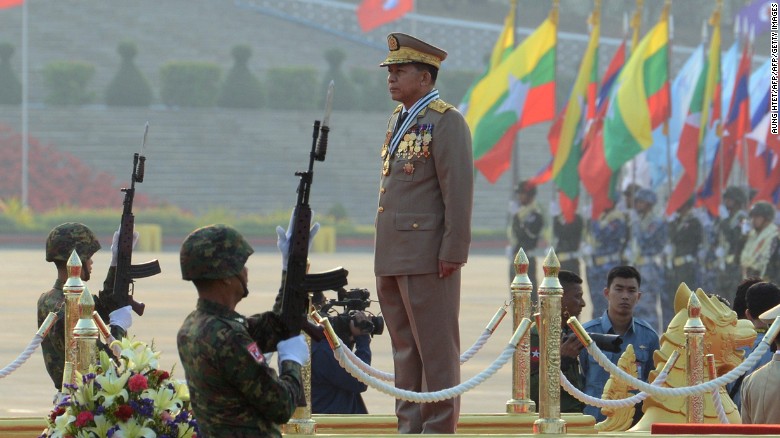
Days before Aung San Suu Kyi's government took office in March 2016, honor guards raised their bayonet mounted rifles in salute to Sen. General Min Aung Hlaing, commander-in-chief of the Myanmar armed forces, during a ceremony to mark the 71st Armed Forces Day.
The military junta, which ruled the country with an iron fist from 1962 until 2011 -- arresting democracy advocates including Suu Kyi, imposing martial law and killing protestors -- still controls the security forces, the police and key cabinet positions in the government. And there's nothing Suu Kyi can do about it.
"Under the Constitution the commander-in-chief (of Myanmar's Armed Forces) is his own boss, he doesn't report to Aung San Suu Kyi. He can't be fired," said Aaron Connelly, a research fellow in the East Asia Program at the Lowy Institute in Sydney.
"If the military has to choose between control and international respect, they will choose control. It's a question of how much they're willing to give up. We haven't seen much evidence that they're willing to give up anything beyond what they gave up in the 2008 constitution," he told CNN.

Still wielding control

In 2008 a new Constitution allocated a quarter of the seats in parliament to the military. It was the military's way of easing Myanmar's return from exile as a pariah state: constitutional reform, civilian government, and the restoring of Suu Kyi to public life. But also enshrined in the Constitution is the ability for the military to flex its muscle when it senses that those newfound freedoms might encroach on its hold over defense in Myanmar.
Among the edicts in the document is the condition that no one with dual-citizen relations (including parents or children) can ever be president. Because both of Suu Kyi's adult sons are British citizens, as was her late husband, she was unable to assume the presidency. However, she is able to still largely play that role in a position that was created especially for her, State Counselor. During the 2015 elections she told a news conference that should her party win and form the government "I will be above the president. It's a very simple message."
In the Constitution, the role of the commander-in-chief -- who is the ultimate military authority. -- often overrides that of the President. Along with nominating military candidates for seats in both houses of parliament, the Constitution also allows the commander-in-chief, in the event of a state of emergency "the right to take over and exercise State sovereign power." The constitution also bans "retrospective" penal law -- an addition possibly meant to prevent the military from being prosecuted for past crimes, including the house arrest of Suu Kyi and the junta's disavowal of the 1990 elections that would have effectively routed the generals from power.
When she addressed diplomats in Myanmar on September 19, Suu Kyi stressed that her government was still young -- in power for a mere 18 months -- and efforts to bring democracy to the country were still fledgling.
"After half a century or more of authoritarian rule, now we are in the process of nurturing our nation," she said. "We are a young and fragile country facing many problems, but we have to cope with them all. We cannot just concentrate on the few."
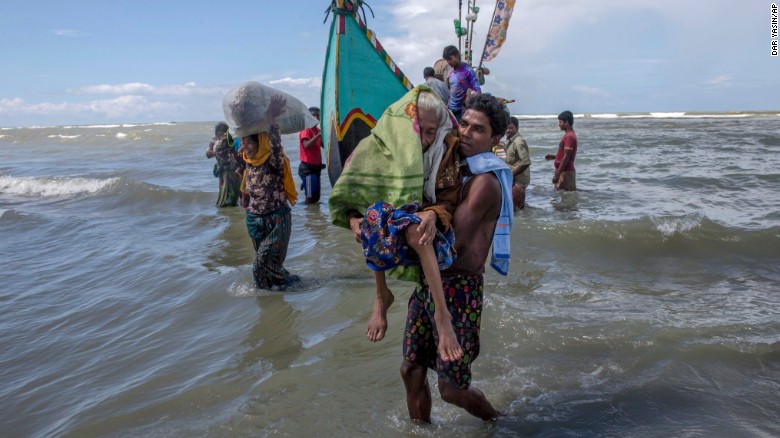
A Rohingya Muslim man walks to shore carrying an elderly woman after they arrived on a boat from Myanmar to Bangladesh.
The internationally-feted democracy advocate has had to endure the howls of outrage from around the world at the military's treatment of the Rohingya. For her military counterpart, Commander-in-Chief Sen. General Min Aung Hlaing, on the other hand, it's been business as usual.
While Suu Kyi chose to cancel a trip to the US to speak at the United Nations General Assembly to deal with the problems at home, Min Aung Hlaing has been hosting foreign diplomats, speaking to military audiences and receiving donations to a fund for people displaced by the "chaos" instigated by Rohingya insurgents.
His formal engagements are posted almost daily to his verified Facebook page, to more than 1.28 million followers.

A prolific Facebook account

On September 15, 2017 a post written in English quoted Min Aung Hlaing saying there had been 93 clashes with "extremist Bengalis" since August 25. The militants, the post claimed, intend to build a stronghold in a district in Rakhine State. "They have demanded recognition as Rohingya, which has never been an ethnic group in Myanmar. Bengali issue is a national cause and we need to be united in establishing the truth."
Earlier, on September 1, 2017, another post in English harkens back to the loss of "Rakhine ethnics" of Rakhine State in 1942, "in which Bengalis attacked, murdered and coerced them into leaving their homes. We will never let such a terrible occurrence happen again."
Both Suu Kyi and the military have said the violence in Rakhine State, which prompted the mass exodus of nearly half a million people, was instigated by Rohingya militants.
As well as refusing to publicly refer to the name Rohingya, Suu Kyi insists the violence and the displacement has affected many other people too.
There is long-held prejudice against the Rohingya among the people of Myanmar. Some Rohingya were originally brought in as laborers under British rule from 1824 to 1948 in what the British considered an internal migration because the area was part of British-administered India. Many Rohingya, however, say they are descendants of Muslim traders who can be traced back to the ninth century. In reality, there is likely to be a mix of ethnicities among them.
When the government of Myanmar passed a citizenship law in 1982, it said Rohingya could apply if they spoke an officially recognized language and could prove that their families had lived in the country before independence. But most Rohingya were never granted the paperwork to prove their roots and are effectively stateless. They did not make the list of the 135 recognized ethnicities in Myanmar. In his public statements Min Aung Hlaing doesn't refer to Rohingya by that name, using instead the term "Bengali."

Arms sales and weapons embargos

The military has avoided condemnation from Western nations precisely because it is still wending its way out of isolation. For decades, countries like the US had limited diplomacy with Myanmar, assigning defense attaches instead of ambassadors to the US embassy and attempting to maintain contact while trying not to be tainted by the military's disregard for human rights.

Refugee: Government forces are torturing us 02:43
Under the Obama administration the military relationship between the two countries focused largely on training the military in rule of law, human rights and disaster relief, with the occasional participation in multilateral exercises -- nothing the military would be too concerned to lose, said Aaron Connelly at the Lowy Institute.
"We never got to the point where those relationships existed and so because we never got there, we don't have the leverage over the military to be able to say, by cutting off our relationship with you we can make you an international pariah. We never developed the carrots and now all we're really left with are sticks," he said.
There are still US and EU arms embargoes against Myanmar, but it continues to receive weapons and training from allies including China, India, Russia and even Israel.
"It's very murky, it's one of the least transparent countries in Asia when it comes to these things," said Siemon Wezeman, a senior researcher on arms and military spending at the Stockholm International Peace Research Institute.
"Looking at all the different sources you get a picture of China being by far the most important supplier. The weapons we see showing up, the bigger ones, are Chinese, all land, air and seacraft."
Russia, he says, supplies helicopters and light aircraft, India supplies weapons to Myanmar's navy and despite the EU ban, some European equipment makes it through Wezeman said, although not with the blessing of those countries.
"It's indirect. It's mainly engines, sometimes it's for Chinese ships that end up in Myanmar. They're produced under license in China but they're supposed to inform the European countries," he said, adding that the engines may not be considered to be weapons.
"When India supplied equipment to Myanmar including radar, some of those radars were based on a Dutch design. The Dutch made it very clear that if there was Dutch technology and Dutch components that India was breaking any agreements it had because those things were considered weapons." The Indians, he said, responded that they were all Indian-made.

On front lines of Myanmar's 'humanitarian catastrophe' 03:18

The business of war

Defense spending makes up 14% of Myanmar's budget, which even includes arts funding for propaganda projects. But even during its economic and political isolation Myanmar was able to buy weapons and hardware because of the controlling interest the ruling junta had in several government monopolies.
Some of their business properties include Myanmar Economic Corporation, which maintains holdings in manufacturing, telecommunication, transport and even gin. Myanmar Economic Holdings Limited brings the ruling generals lucrative returns on cigarette and petroleum imports.
The generals "insert themselves in various parts of the economy and use this to enrich their shareholders," said Yeshua Moser-Puangsuwan, a contributor to a 2015 Transparency International report on Myanmar, quoted in the Financial Times. "Despite the political changes in Myanmar, the military remains solidly in control, and its books are still closed to public scrutiny."
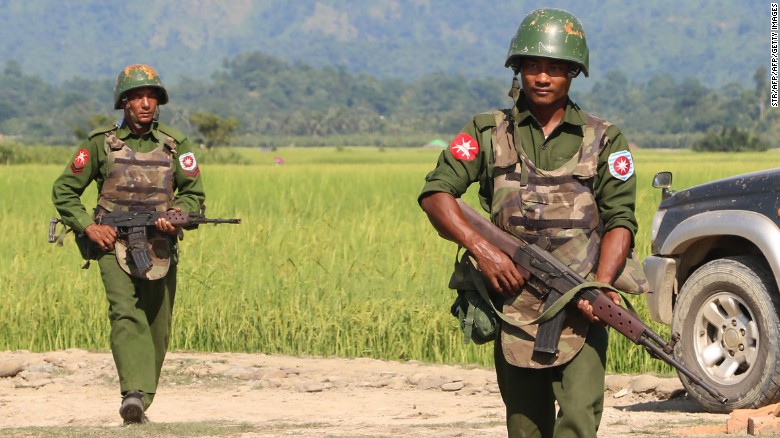
In this photograph taken on October 21, 2016, armed Myanmar army soldiers patrol a village in Maungdaw located in Rakhine State
World leaders are now being urged to implement sanctions against the military itself, to try to push the ruling officers to end their campaign against the Rohingya. Sen. John McCain said he plans to remove language from a defense authorization bill that would have expanded training exercises between the US military and Myanmar's.
"While I had hoped the NDAA (National Defense Authorization Act) could contribute to positive reform in Burma," McCain said in his statement, "I can no longer support expanding military-to-military cooperation given the worsening humanitarian crisis and human rights crackdown against the Rohingya people, and will seek to remove this language when the Senate begins debating the NDAA."
Australia's government, which pledged more than $53 million ($66 million Australian) in aid for Myanmar in 2017-2018, has said its agreement with Myanmar was aimed at helping the country's transition to a democracy. The UK said it would suspend its training program for the military because of the violence in Rakhine State "until there is an acceptable resolution to the current situation," a spokesman for the British government said on Tuesday. The UK government called on Myanmar's military to "take immediate steps to stop the violence in Rakhine and ensure the protection of all civilians, to allow full access for humanitarian aid." Five military trainee officers attending courses in the UK were being sent back to Myanmar, the country's military information office posted on its official Facebook page. They were being "forced to return" after the UK suspended the program, the post said. The military would be bringing them home as quickly as possible, adding that "no trainees," including those who sent under previous agreements with the UK, "will be sent to Britain anymore."

No weapons embargo for countries like Israel

Because Myanmar is subject to a weapons embargo from the European Union and the United States, it has turned to other suppliers including India and Israel for its needs, amid a push to become less reliant on China, wrote Myanmar expert Andrew Selth.


Suu Kyi: Majority of Muslims have not left 00:46
In Israel, human rights activists have petitioned the Israeli High Court to halt sales of military weapons and equipment to Myanmar. Eitay Mack, the lawyer presenting the petition said that Israel has been opaque over the nature of its longstanding relationship with Myanmar, but the internet has provided his legal team with significant information that is public and hard for Israel to ignore.
"Israel could be considered as compliant in crimes against humanity, it's enough that Israel knows that this is happening and the weapons and training it sends to Myanmar could be used for its crimes," Mack told CNN.
Sen. General Min Aung Hlaing visited Israel in 2015, toured military and naval bases, and published everything on his Facebook page, Mack said. "It was secret in Israel but then I found it on Facebook. It's a public thing and hard for them to argue."
During the 2015 visit the Myanmar generals "disclosed that they had purchased Super Dvora patrol boats from Israel, and there was talk of additional purchases," an article in Israel's Ha'aretz noted.
Min Aung Hlaing's proclivity for posting on Facebook revealed visits to Myanmar by Michel Ben Baruch, the head of Sibat, Israel's defense export unit. Israeli company TAR Ideal Concepts, whose leadership includes a former head of the Israeli police, had published advertisements, Mack said, that included images of forces undergoing training. The post is titled "special weapons systems in Asia," but the flag of Myanmar is visible in one of the images.
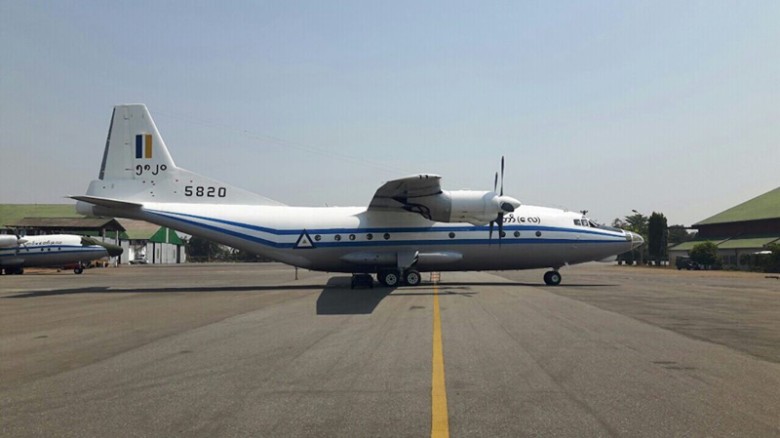
The Myanmar military Shaanxi Y8-200F four-turboprop plane. One crashed in the Andaman Sea on June 7, 2017
Asked for comment about the lawsuit and the state of sales to Myanmar, the Israeli Foreign Affairs Ministry told CNN: "Israel denies categorically the false information in the media regarding a so called involvement in the tragedy in the Rakhine province in Myanmar." The Israeli defense ministry said it "does not comment on matters relating to defense exports."

What the military wants

Longtime Myanmar observer Andrew Selth says the military does not want to run Myanmar, but it does intend to protect its people and its position in the country. Its nationalism will "be cited to justify military operations against ethnic armed groups and, if considered necessary, the Rohingya," he writes.
What should be of great concern for Myanmar, says Selth, is the possibility that people within the armed forces want to "slow down the reform process or to preserve certain perks and privileges."
The older officers grew wealthy through the military's control over the government, and "it has been suggested, for example, that some younger officers resent the fact that current and proposed changes to Myanmar society may deny them the opportunities for personal enrichment enjoyed by their predecessors."
For as long as experts can see, the military will remain the real power in Myanmar, and there will be little Aung San Suu Kyi can do about it.